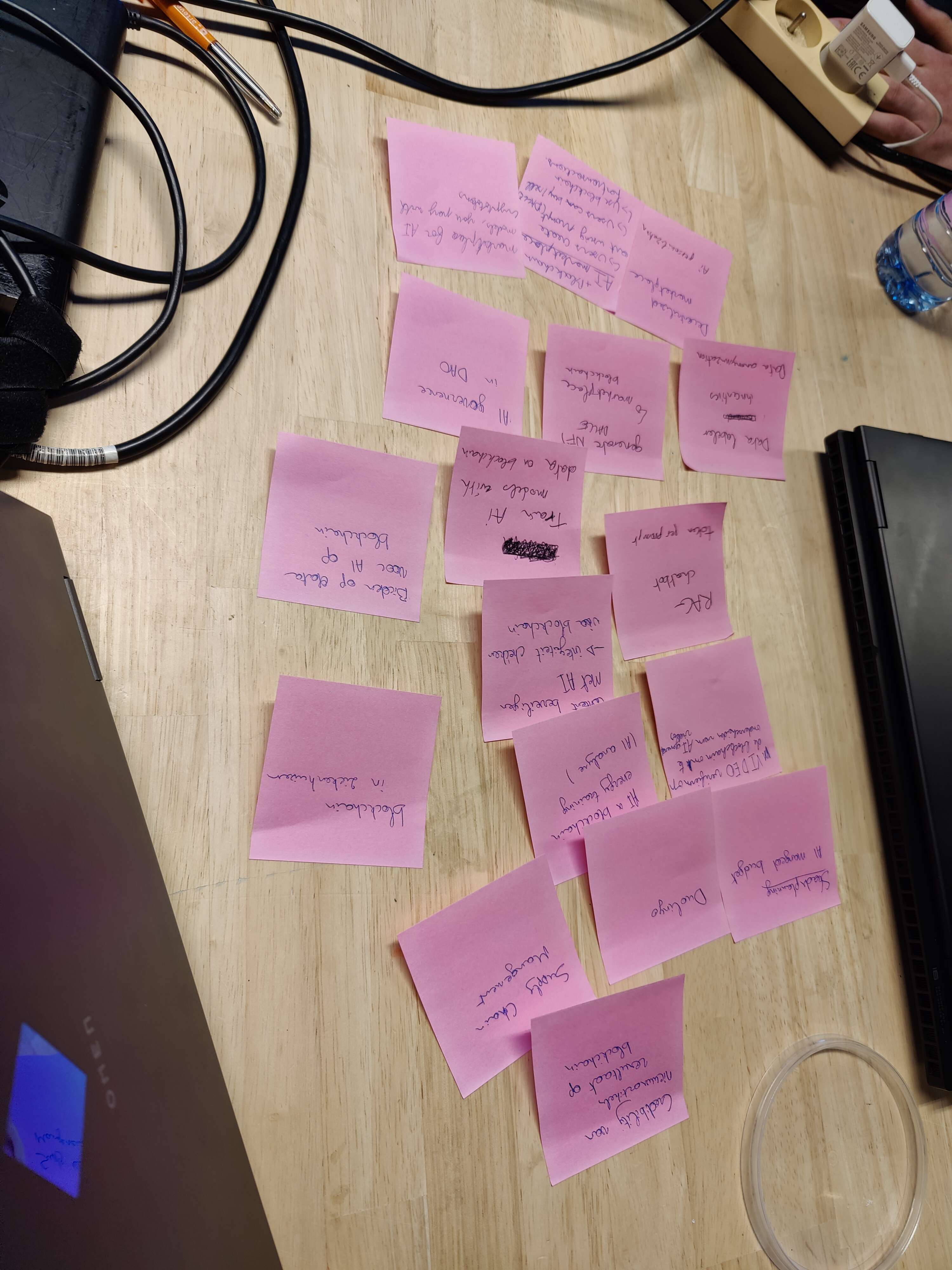
Our challenge was broad: use artificial intelligence and blockchain to rethink an industry. We chose education, narrowed it to sports learning and built a working prototype in one day.
Our team of five began with a shared frustration. Many learning products provide the same material to everyone, while records of progress are scattered across platforms. We wanted to explore whether personalisation and verifiable achievements could work together in one experience.
Defining the role of each technology
We named the prototype Sportify. The AI component adapted learning content to a user's interests, preferences and progress. The blockchain component recorded selected learning milestones so they could be verified independently.
Separating those responsibilities was important. Personal learning data changes frequently and does not all belong on a public ledger. Only the credentials that benefit from independent verification need an immutable record. That distinction helped us avoid using blockchain as a general database.
AI handled personalisation. Blockchain handled verification. The product became easier to explain once every technology had one defensible job.
Building under pressure
We divided the work across experience design, AI logic, application development and blockchain integration. The tight deadline forced us to protect the central flow: create a profile, receive relevant learning material, complete an activity and record the achievement.
Integration was the hardest part. Each component worked with different assumptions about data and timing. We adjusted the interfaces repeatedly and reduced scope where necessary. A complete narrow flow was more persuasive than several unfinished features.
Presenting the result
At the end of the hackathon, we demonstrated the prototype to a jury and explained both the user value and the technical decisions behind it. The judges were particularly interested in how the concept could extend beyond sports to other educational settings.
Sportify finished in second place. The result validated the team's execution, but the larger lesson was about restraint. Innovation did not come from placing two fashionable technologies next to each other. It came from understanding where each technology added value, then connecting those parts around a coherent user journey.
The prototype still had open questions around privacy, credential standards and long-term governance. Those questions are exactly where future work should begin.